
Bird Watching in Jervis Bay: A Guide to the Best Birding Spots
The Activity Snapshot
| Detail | Specification |
|---|---|
| Best Birding Areas | Booderee Botanic Gardens, heathland, Telegraph Creek, Green Patch, Murrays Beach and coastal trails |
| Best Time | Early morning, particularly during spring and warmer months |
| Difficulty | Easy to moderate, depending on the trail |
| Dog Friendly | No, dogs are prohibited in Booderee National Park |
| What to Bring | Binoculars, water, hat, sunscreen and comfortable walking shoes |
| Closest Towns | Jervis Bay Village, Vincentia and Huskisson |
Our rating: The most productive coastal circuit for spotting Eastern Yellow Robins and endangered heathland species, provided you arrive before the morning heat sets in and the March flies emerge.
The first thing you notice standing in the coastal woodland of the Jervis Bay peninsula is the sound. Before the Pacific Ocean comes into view, the overhead canopy of old-growth spotted gums and black sheoaks emits a continuous, dry rattle in the morning breeze. Underfoot, the tracks alternate between dense, grey quartz sand and brittle ironstone. For visitors driving down from the concrete grid of Sydney or the frost-heavy mornings of Canberra, this region offers immediate physical grounding. The air smells of salt spray and the sharp, medicinal edge of crushed eucalypt leaves. With over 200 bird species recorded across the area, the landscape acts as a geographical intersection for migratory seabirds and a permanent residence for endangered heathland dwellers. Located just a fifteen-minute drive south from the accommodation hubs of Vincentia and Huskisson, tracking these species requires walkers to slow their pace, leave the phone in the car, and look up into the canopy.
The Botanic Gardens Understorey
The circuit begins at the Booderee Botanic Gardens, where the dense coastal rainforest provides a sheltered, low-light environment. The air here holds the humidity of the previous night, and the soil is dark and damp. Look for the distinctive blue flash of a Satin Bowerbird darting between the ground ferns, or scan the rough, grey bark of the bloodwoods for the mottled camouflage of Tawny Frogmouths. The thick vegetation absorbs the coastal wind, making it easier to track the sharp, descending whistle of an Eastern Spinebill feeding on the grevilleas.
The Woodland Edge
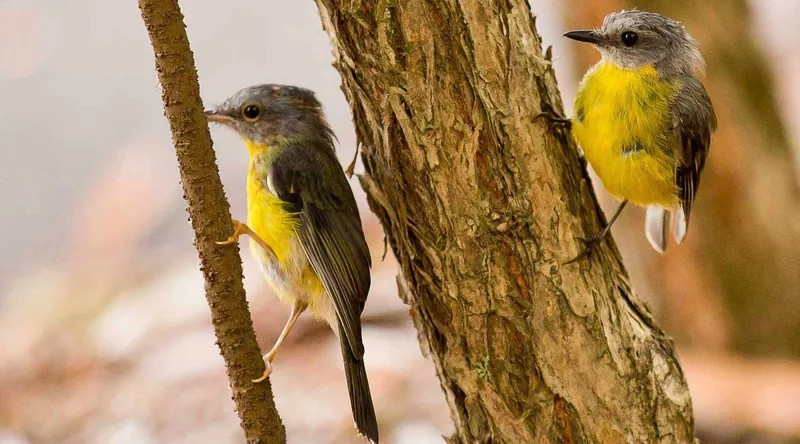
Moving outward toward the Telegraph Creek and Green Patch tracks, the environment shifts to open woodland. Mature scribbly gums dominate the inland sightline, their pale trunks marked by the erratic, dark tunnels of moth larvae. This transition zone is highly active in the early hours. Eastern Yellow Robins cling sideways to the lower tree trunks to scan the leaf litter for insects. Higher up, Yellow-tailed Black Cockatoos strip pine cones, dropping heavy woody debris onto the ironstone track below.
The Bherwherre Wetland Boardwalk at Sanctuary Point
For a change of habitat, head to the Bherwherre Wetland Boardwalk in Sanctuary Point. Coastal woodland gives way to paperbarks, reeds, shallow water, and mudflats, creating excellent conditions for spotting Australian White Ibis, Australasian Swamphens, Eurasian Coots, and Pacific Black Ducks. Visit early, when bird activity is highest and the wetland is quiet. Scan the water’s edge and reed beds, but listen carefully, too; many birds remain hidden in the dense vegetation. The easy boardwalk makes this a good option for families and birders looking for a less demanding walk. Keep movements slow and voices low to avoid disturbing feeding and resting birds.
The Exposed Coastal Heath
Approaching the Murrays Beach perimeter, the tree canopy abruptly drops away, replaced by a vast plateau of knee-high scrub she-oak and heath-leaved banksia. There is no shade here. During the summer months, this unshaded stretch becomes fiercely hot by mid-morning, and the local March flies are relentless. It pays to cross this section early, when the temperature sits lower and the morning dew still keeps the dust down. This low, tangled scrub is the primary habitat for the endangered Eastern Bristlebird; you will often hear their melodic calls cutting through the coastal wind long before you spot them darting rapidly across the abrasive gravel path.
The Playback Rule: Booderee National Park enforces a strict no-playback rule. Using recorded bird calls to draw out species like the Eastern Bristlebird disrupts their natural breeding behavior and is actively monitored by park rangers.
The Bower Search: When navigating the Botanic Gardens, check the edges of the shaded fern gullies for the elaborate, blue-decorated structures of the male Satin Bowerbird. Maintain a strict distance to avoid disrupting the site.
The Thermal Updrafts: When walking the coastal edges near Governors Head, keep an eye on the steep sandstone drops. White-bellied Sea-Eagles regularly ride the thermal updrafts here, holding their broad, flat wings rigid against the gales.
The Golden Hour: The first hour of daylight provides a low, warm light that penetrates the dense woodland canopy, catching the yellow plumage of New Holland Honeyeaters feeding heavily on the coastal banksias.
Seasonality: September brings an explosion of red and orange banksia flowers across the heath, drawing nectar-feeding lorikeets. Late winter and early spring also offer opportunities to spot southward-moving humpback whales returning toward Antarctic waters.
What to Pack: Bring a physical topographic map, 8×42 binoculars suited for low-light forest conditions, and thick hiking socks to protect your ankles from the abrasive low scrub on the heathland.
Returning from an early morning tracking ground parrots and rosellas requires a quiet place to retreat, wash off the fine ironstone dust, and process the morning’s observations. Our properties are managed to serve as a practical, comfortable basecamp for outdoor itineraries, stripping away the unnecessary friction of coastal travel.
- For the Active Explorer: Properties equipped for hikers and birders prioritize utility over ornament. Look for homes featuring outdoor hot showers to wash away the coastal mud, secure gear-storage areas for expensive optics, and heavy-duty laundry facilities.
- For the Family Adventurer: Walking the bush tracks with children requires a strategic location. We recommend houses positioned within a short, flat walk to the calm shallows of Collingwood Beach or Moona Moona Creek. These homes offer expansive, secure yards and large timber decks where families can spread out field guides and equipment without feeling cramped.
- For the Solitary or Quiet Seeker: If the primary goal is total disconnection, choose a smaller coastal cabin tucked away from the main arterial roads. Properties with quiet verandahs looking into the canopy of spotted gums provide a silent space to catalogue the morning’s sightings.
After a morning exploring the wetlands, woodland, and heathland around Jervis Bay, head back toward Vincentia for coffee and a bite to eat. Stop at The Local Jervis Bay on Burton Street and order a batch brew coffee with their thick-cut, buttered fruit toast. Take it to the timber benches overlooking the water and watch the local pelicans near the boat ramp.