Explore Point Perpendicular on the Jervis Bay Passage Cruise
At a Glance: The Story Snapshot
| Detail | Information |
| Experience Type | Coastal Touring & Marine Observation |
| Best Time of Year | Late Spring to Autumn (November-April) |
| Ideal Duration | Around 2 hours on the water |
| Atmosphere | Open coastal scenery with rugged cliffs, ocean views and changing sea conditions |
| Departure Point | Huskisson Wharf |
While Jervis Bay is best known for its white-sand beaches, a cruise to Point Perpendicular reveals another side of the region, with towering sandstone cliffs, sea caves and exposed coastal landscapes that are only fully appreciated from the water.
Point Perpendicular Cruise in Jervis Bay: What to Expect
A cruise to Point Perpendicular provides a close-up view of Jervis Bay’s dramatic sandstone cliffs, marine environment and coastal scenery that cannot be experienced from most land-based lookouts. Departing from Huskisson Wharf, the journey crosses the bay toward impressive sandstone escarpments, sea caves and rugged headlands that are best appreciated from the water. Wildlife is an important part of the cruise experience, with bottlenose dolphins regularly seen in Jervis Bay and humpback whales sometimes visible during their annual migration. A variety of seabirds also inhabit the surrounding coastline. The combination of sandstone cliffs, sea caves, marine wildlife and expansive coastal views makes this cruise a distinctive way to experience Jervis Bay from the water.
What You’ll See on a Point Perpendicular Cruise
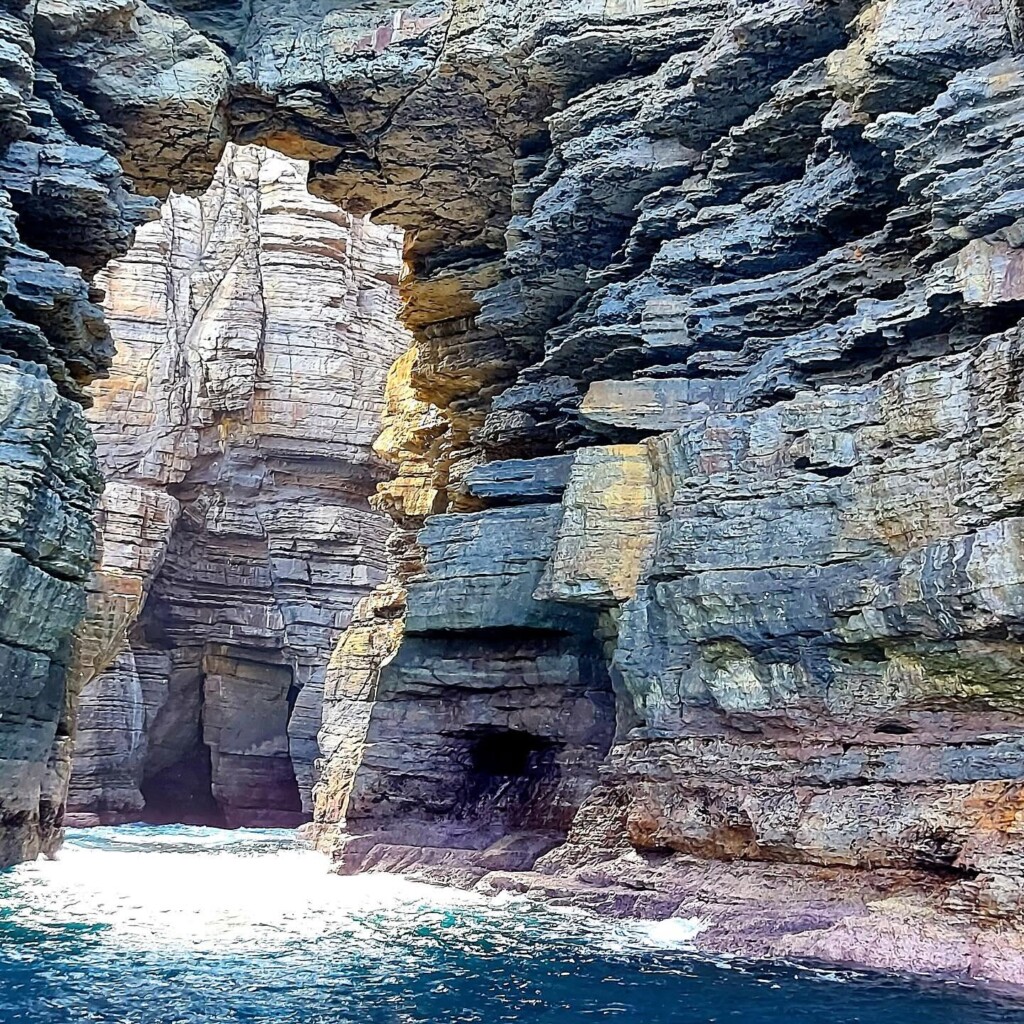
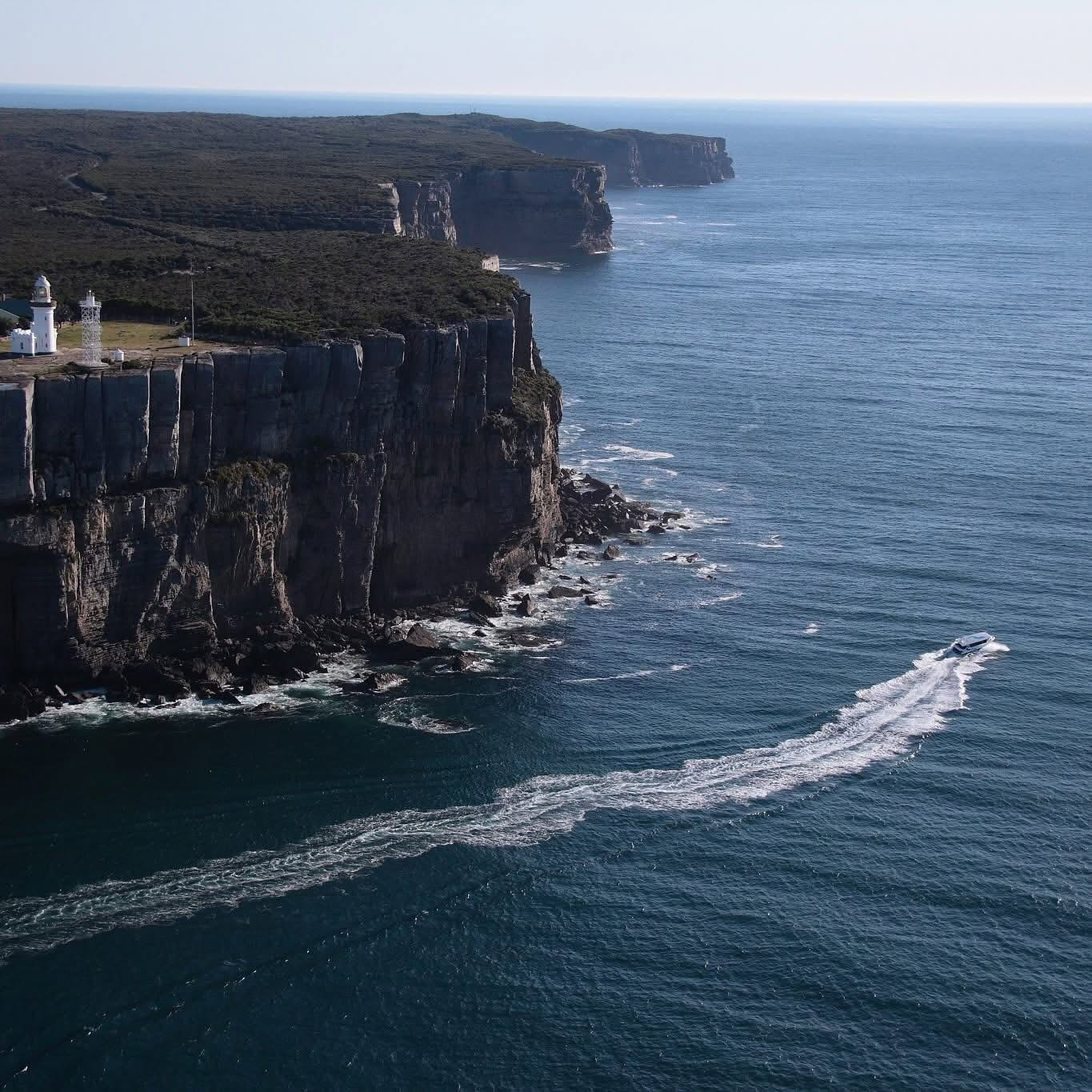
From the white sand of the local beaches, the eastern headlands appear distant and unassuming. Crossing the bay toward Point Perpendicular completely alters that perspective. Rising roughly 90 metres above the Tasman Sea, the exposed sandstone escarpment becomes the defining feature of the landscape. The sandstone cliffs at Point Perpendicular are part of the Sydney Basin and were formed during the Triassic Period, approximately 240 to 250 million years ago. Layers visible along the cliff face record ancient river systems that once crossed the region before long-term coastal erosion shaped the landscape seen today.
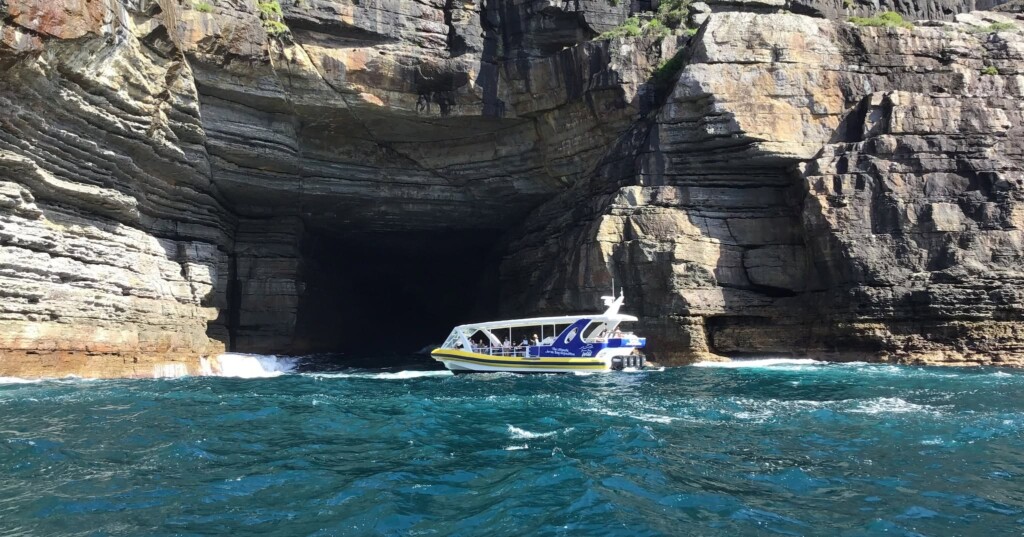
Depending on sea conditions, cruise operators may navigate close to the cliff face. When weather and swell permit, skippers can carefully manoeuvre near selected sea caves and sandstone formations, allowing passengers to appreciate the scale of the coastline from the water.
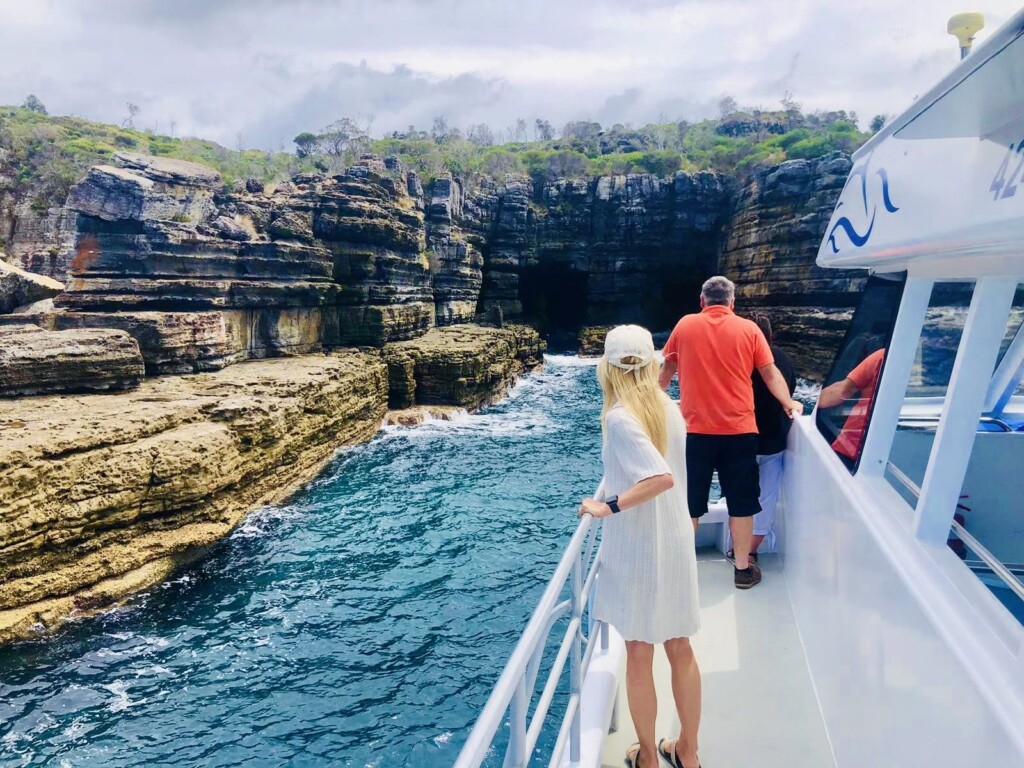
Throughout the cruise, visitors can move freely around the vessel to enjoy changing views of the coastline and marine environment. Many spend time scanning the water for bottlenose dolphins and seabirds, while others simply take in the rugged coastal cliffs and open ocean scenery. Seating and viewing areas around the vessel also provide excellent opportunities to photograph the cliffs, sea caves and surrounding coastline.
On the return leg, the boat traces the southern shoreline of Booderee National Park. The route passes sheltered coves, rocky headlands and the pristine stretches of Murrays Beach and Hole in the Wall. Jervis Bay’s high silica-content sand reflects sunlight through the shallow water, contributing to the area’s well-known turquoise and blue coastal colours. As the afternoon light deepens, the colours of the dense bushland and the surrounding headlands become sharp and pronounced.
Ready to experience it yourself? Book a Jervis Bay Passage Cruise to see Point Perpendicular, sea caves and Jervis Bay’s marine wildlife from the water.
Local Secrets for the Open Water
- Choose a Morning Departure: Morning departures often experience calmer sea conditions, particularly during the warmer months when afternoon northeasterly winds are more common.
- Navigating the wharf: Parking around Huskisson Wharf fills up fast on weekends and holidays. Arrive at least 20 minutes early to secure a spot and avoid a stressful sprint to the boarding ramp.
- Managing the motion: The bay is usually calm, but the water becomes significantly more exposed near Point Perpendicular. If you are prone to seasickness, stand near the stern, stay in the fresh air, and keep your eyes fixed on the horizon.
- The coastal kit: Bring a windproof jacket, even in the middle of summer. Pack polarised sunglasses to cut the surface glare and improve your chances of spotting marine life, and carry a dry bag to protect your phone and camera from sudden sea spray.
Things to Do After Your Cruise
After returning to Huskisson Wharf, many visitors continue exploring the surrounding area. Nearby beaches such as Greenfield Beach and Hyams Beach are within a short drive, while cafés, restaurants and local shops in Huskisson provide plenty of options for lunch or an afternoon stroll. Visitors planning an overnight stay can choose from holiday parks, apartments, beach houses and holiday rentals across Huskisson, Vincentia and neighbouring Jervis Bay communities.
Continue Exploring Around Huskisson
The day does not have to end when the cruise returns to Huskisson Wharf. Take a short stroll into the industrial estate to visit Jervis Bay Brewing Co. for a locally brewed craft beer, or head to Greenfield Beach to walk the White Sands Walk towards Hyams Beach. Before returning to your accommodation, consider stopping at the independent grocers and specialty food stores in Vincentia to pick up local produce for dinner.